Mobility Guide
Construction Worker Mobility: Self-Resisted MET Resets for a Physical Workday
Construction worker mobility is a set of self-resisted MET resets for the areas commonly loaded by lifting, carrying, kneeling, climbing and overhead work.
This guide provides workday mobility resets for the areas commonly loaded by lifting, carrying, kneeling, climbing and overhead work — the shoulders, back, hips, arms and legs. Each reset uses clinically informed Muscle Energy Techniques (MET) and self-resisted stretching. You can do them before, during or after a shift, with no equipment or partner required.
Written by Cara Jenner, Clinical Massage Therapist
Published · Updated
Key takeaway
Construction work repeatedly loads the shoulders, back, hips, arms and legs through lifting, carrying, kneeling, climbing and overhead activity. For construction workers noticing tightness or restriction after physically demanding shifts, self-resisted mobility resets offer a practical, equipment-free way to explore comfortable movement before, during or after work. Each reset uses a brief, controlled muscle contraction against your own resistance, followed by relaxation and gentle movement into a more comfortable range. One randomized controlled trial in construction workers found that 12 weeks of ergonomics training, with or without added exercise, was associated with significant improvements in work-related musculoskeletal disorders. That result suggests structured, regular movement and ergonomics attention can support how the body feels across a physical workweek. JSM Reset keeps this guidance informational and self-directed — you control the resistance and adjust each reset to what feels appropriate for your body on any given day. (Ševgin et al., 2025)
Why can construction work leave the body feeling tight?
Construction work can leave the body feeling tight because it repeats similar movements in challenging positions throughout the day. Some workers may notice tightness or restriction through the shoulders, back, hips, arms or legs. Regular changes in movement and guided mobility work can help support comfortable movement throughout the workday.
Understanding how these areas connect is the first step toward exploring a guided mobility approach that fits the demands of a physical job.
How does self-resisted mobility work for construction?
Self-resisted mobility for construction works through a clinically informed approach that uses your own muscle force to support comfortable movement. The basic principle is simple: gently create a controlled muscle contraction against resistance for a short hold, relax, and then move gradually into a comfortable range.
This self-resisted approach uses a brief, controlled muscle contraction followed by relaxation before moving gently into a comfortable range. Because you control the resistance, the approach remains self-directed and can be adjusted to what feels appropriate for your body that day.
Mobility Resets for Construction Workers
JSM Reset offers guided self-resisted programs for each area commonly involved in construction work. Each program follows the MET principle: resist, relax, and gently explore a new range of movement.
Neck Reset
Guided self-resisted stretches for the neck
Shoulder & Upper Back Reset
Guided self-resisted stretches for shoulders and upper back
Arms Reset
Guided mobility for the upper arms, forearms, wrists and hands
Lower Back Reset
Guided self-resisted stretches for the lower back
Hip & Pelvic Reset
Guided self-resisted stretches for the hips and pelvis
Leg & Knee Reset
Guided mobility for the legs and knees
Find the Areas That Feel Tight
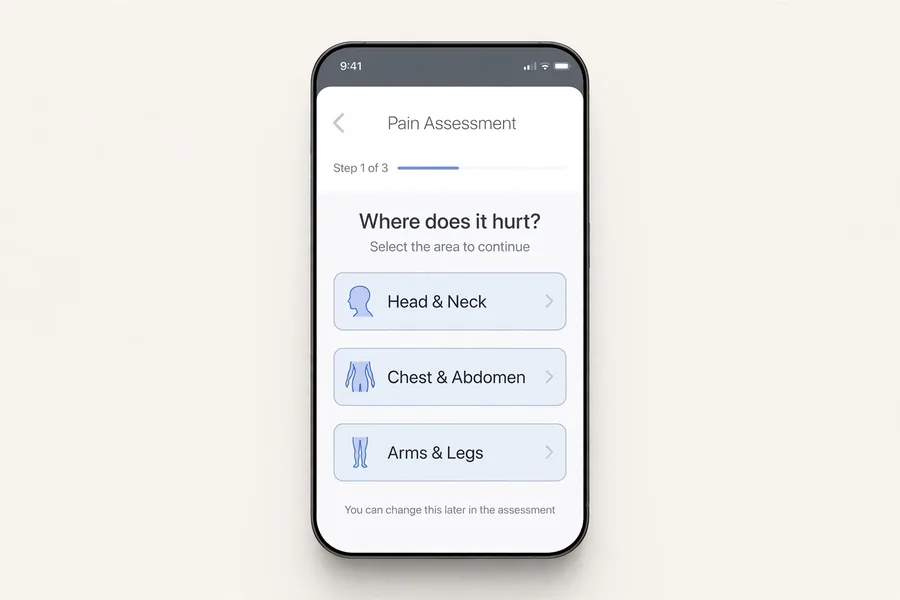
Not sure which areas feel tight? The JSM Reset Find My Pain tool lets you tap areas on an interactive body map to explore the muscles in that area. It then guides you toward a relevant Reset program.
Open Find My PainUnderstand the Muscles You Use at Work
Lifting, carrying, reaching, kneeling and climbing involve muscle groups throughout the body working together. The JSM Reset Anatomy Lab provides educational information about muscle location, function and movement so you can better understand how different areas connect.
Explore the Anatomy LabEvidence & Sources
Ergonomics and exercise approaches for construction workers have been examined in a randomized controlled trial, and official occupational-health guidance describes the physical demands of construction work. The sources below are shared for educational reference and do not validate JSM Reset or guarantee individual results.
A randomized controlled trial in construction workers found that 12 weeks of ergonomics training, with or without added exercise, was associated with significant improvements in work-related musculoskeletal disorders.
Official U.S. occupational-health guidance noting that construction workers who often lift, stoop, kneel, twist, grip, stretch, reach overhead, or work in other awkward positions are at risk of musculoskeletal strain.
These sources are shared for educational reference only. They describe specific study populations and outcomes and do not validate JSM Reset, diagnose any condition, or guarantee individual results.
JSM Work Ready — Construction Workers
Continue into a guided before-work, during-work and after-work reset designed around the physical demands of construction work.
Explore Construction Work Ready