Mobility Guide
Labourer Mobility Guide
Labourer mobility is a set of gentle self-resisted stretching and movement practices for the areas commonly loaded during lifting, carrying, pushing and pulling.
This guide provides mobility and recovery guidance for labourers dealing with lifting, carrying, pushing, pulling, bending and repetitive tool use. It covers the neck, shoulders, chest, upper back, hands, wrists, forearms, lower back, hips, hamstrings, knees and calves with gentle self-resisted stretching and movement ideas.
Written by Cara Jenner, Clinical Massage Therapist
Published · Updated
Why can labour work leave the body feeling tight?
Varied physical work can repeatedly load the shoulders, back, hips, hands, legs and other areas depending on the task. Lifting, carrying, pushing, pulling and bending all place different demands on the body throughout a shift, which can leave commonly used areas feeling tired or restricted.
Understanding how these areas work together is the first step toward exploring a guided mobility approach that fits the demands of physically demanding work.
Common Work Demands
Which areas are commonly loaded during labour work?
The areas commonly loaded during labour include the neck, shoulders, chest, upper back, hands, wrists, forearms, lower back, hips, hamstrings, knees and calves.
Neck & Shoulders
Repeated lifting, carrying and reaching can build tension through the neck and shoulders. Gentle self-resisted stretching and shoulder mobility work can help maintain comfortable movement after physically demanding tasks.
Chest & Upper Back
Pushing, pulling and working in forward positions can shorten the chest muscles and restrict the upper back over time. Gentle opening movements and self-resisted stretching can help maintain comfortable chest and upper-back mobility.
Hands, Wrists & Forearms
Repetitive gripping, tool use and handling materials can leave the hands, wrists and forearms feeling tight. Gentle wrist mobility and self-resisted stretching can help maintain comfortable hand and forearm movement throughout the workday.
Low Back
Lifting, bending and prolonged standing can place demand on the lower back. Gentle self-resisted stretching and mobility work can help support comfortable back movement after a physically demanding shift.
Hips & Glutes
Lifting, crouching and bending can reduce movement through the hips and glutes. Gentle hip mobility work and self-resisted stretching can help maintain comfortable range of motion for bending, stepping and lifting.
Hamstrings
Repeated bending and lifting can leave the hamstrings feeling tight. Gentle self-resisted stretching can help maintain comfortable hamstring length and support comfortable standing and walking.
Knees
Crouching, kneeling and standing for long periods can place repeated demand on the knees. Gentle mobility work and supported movement can help maintain comfortable knee function during and after work.
Calves & Ankles
Long hours standing and walking can leave the calves and ankles feeling tight. Gentle calf stretching and ankle mobility can help maintain comfortable lower-leg movement and support balance.
Practical Mobility Tips
Release repetitive grip between tasks when safe to give your hands, wrists and forearms time to recover.
Change prolonged working positions regularly to reduce stiffness through your back, hips and shoulders.
Restore hip and upper-back movement after bending or crouching with gentle self-resisted stretching.
Move your ankles and calves after prolonged standing or walking to support comfortable lower-leg movement.
Use short movement breaks when appropriate to reset areas that feel most loaded during your shift.
Related JSM Self-Resisted Stretches
JSM Reset offers guided self-resisted programs for each area commonly involved in physically demanding labour. Each program follows the MET principle: resist, relax, and gently explore a new range of movement.
Neck Reset
Guided self-resisted stretches for the neck
Shoulder & Upper Back Reset
Guided self-resisted stretches for shoulders and upper back
Arms Reset
Guided mobility for the upper arms, forearms, wrists and hands
Lower Back Reset
Guided self-resisted stretches for the lower back
Hip & Pelvic Reset
Guided self-resisted stretches for the hips and pelvis
Leg & Knee Reset
Guided mobility for the legs and knees
Find the Areas That Feel Tight
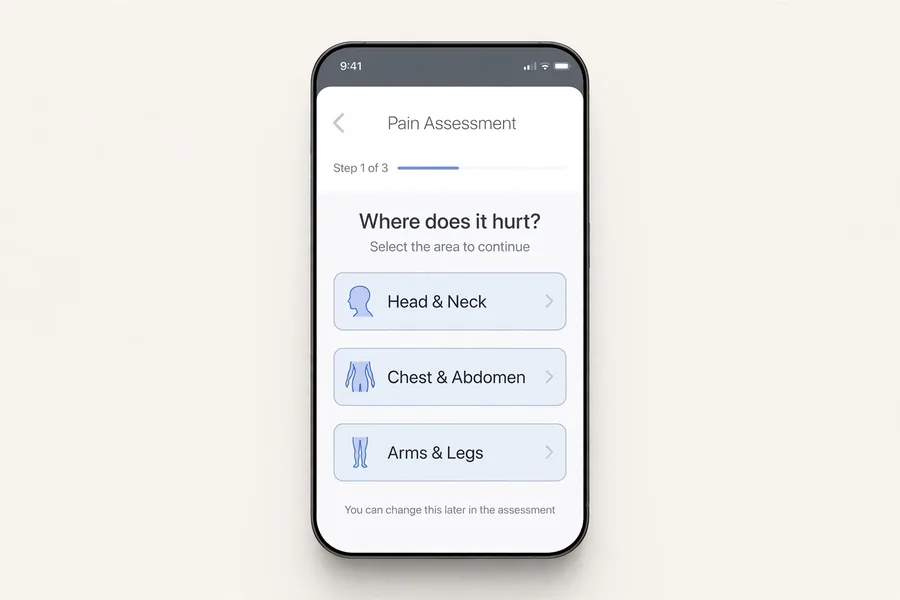
Not sure which areas feel tight? The JSM Reset Find My Pain tool lets you tap areas on an interactive body map to explore the muscles in that area. It then guides you toward a relevant Reset program.
Open Find My PainUnderstand the Muscles You Use at Work
Lifting, carrying, pushing, pulling and bending involve muscle groups throughout the body working together. The JSM Reset Anatomy Lab provides educational information about muscle location, function and movement so you can better understand how different areas connect.
Explore the Anatomy LabOnly perform mobility exercises in a safe location away from active machinery, vehicles, tools, traffic and other workplace hazards.
JSM Work Ready — Labourers
Continue into a guided before-work, during-work and after-work reset designed around physically demanding labour.
Explore Labourer Work Ready