Mobility Guide
Hip Mobility: Self-Resisted Stretching with Muscle Energy Techniques
Self-resisted hip mobility is a way to use controlled muscular effort and relaxation to explore comfortable hip movement.
This guide covers the main areas of hip mobility: the front, back and sides of the hips and pelvis. It introduces the self-resisted stretching techniques you can use to explore hip tightness and support comfortable movement. Each reset uses clinically informed Muscle Energy Techniques (MET) with no equipment or partner required.
Written by Cara Jenner, Clinical Massage Therapist
Published · Updated
Key takeaway
Hip tightness often reflects restriction in the muscles around the front, back and sides of the hips and pelvis rather than one tight muscle. For people noticing limited, uncomfortable hip movement after long periods of sitting or repetitive activity, self-resisted stretching offers a practical, equipment-free way to explore that tightness using clinically informed Muscle Energy Techniques. The approach uses a brief, controlled muscle contraction against your own resistance, followed by relaxation and gentle movement into a more comfortable range. One randomized controlled trial in asymptomatic participants found that two MET applications both increased hamstring extensibility, measured by active knee extension, with improvement sustained one week after treatment. That study measured hamstring flexibility, not hip pathology, but it indicates repeated self-resisted sessions can support how the hip and hamstring region moves. JSM Reset keeps this work informational and self-directed — you control the resistance throughout. (Smith & Fryer, 2008)
Why can hip mobility feel restricted?
Hip mobility can feel restricted when the muscles around the front, back, and sides of the hips become tight. Long periods of sitting, repetitive activities, training demands, and limited movement variety may leave some people noticing tightness or restriction around the hips. Regular movement and changes in position can help support comfortable hip mobility.
Understanding which muscles are involved is the first step toward exploring that tightness with a guided approach.
How does self-resisted hip mobility work?
Self-resisted hip mobility works through a clinically informed approach that uses your own muscle force to support comfortable movement. The principle is straightforward. You gently resist a movement using your own muscle force for a short hold. Then relax and allow the muscle to lengthen into a more comfortable range of motion.
This self-resisted approach uses a brief, controlled muscle contraction followed by relaxation before moving gently into a comfortable range. Because you control the resistance throughout, the approach is inherently self-directed. You can adjust the intensity to what feels right for your body on any given day.
Self-Resisted Hip Stretches
The JSM Reset Hip & Pelvic Reset program walks you through a series of self-resisted stretches targeting the major muscle groups of the hips and pelvis. Each stretch follows the MET principle: resist, relax, and gently explore a new range of movement.
Find Your Tight Hip Muscles
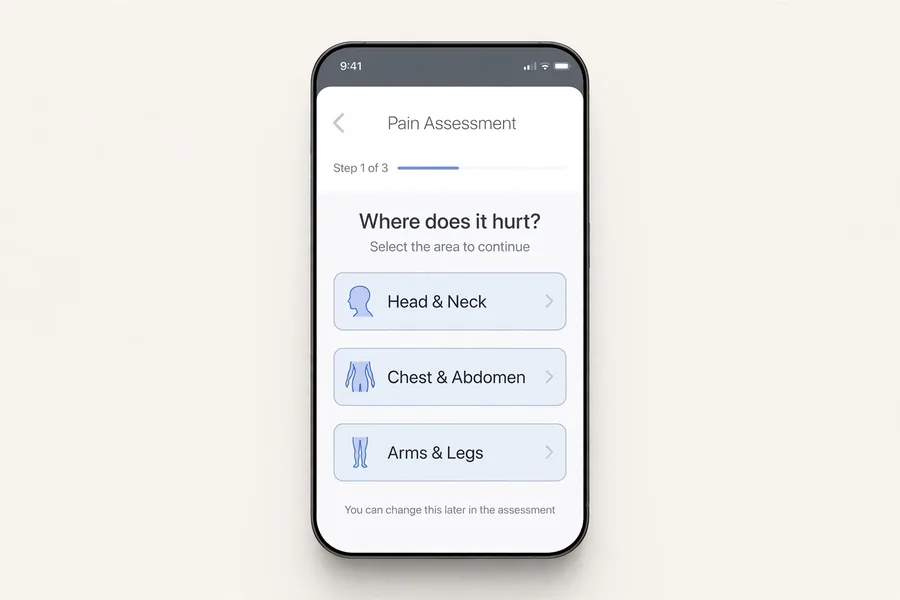
Not sure which areas feel tight? The JSM Reset Find My Pain tool lets you tap areas on an interactive body map to explore the muscles in that area. It then guides you toward a relevant Reset program.
Open Find My PainUnderstand the Hip Anatomy
Learning how the hip muscles work together can help you understand why certain areas feel tight and how self-resisted stretching supports mobility. The JSM Reset Anatomy Lab provides educational content on muscle function, movement, and how the body works as a connected system.
Explore the Anatomy LabEvidence & Sources
Muscle Energy Techniques relevant to hip mobility have been examined in clinical studies. The sources below describe specific populations and outcomes — including what was actually measured (flexibility, range of motion, or pain) — and are shared for educational reference. They do not validate JSM Reset, diagnose hip pathology, or guarantee individual results.
A randomized controlled trial in asymptomatic participants found that two MET applications both increased hamstring extensibility (measured by active knee extension), with improvement sustained one week after treatment. The study measured hamstring flexibility, not hip pathology.
A randomized pilot study in individuals with nonspecific lumbopelvic pain found that MET targeting the hamstrings and iliopsoas (hip-region muscles) produced a significant within-group reduction in pain 24 hours after a single session. It was a pilot study measuring short-term pain, not flexibility.
These sources are shared for educational reference only. They describe specific study populations and outcomes and do not validate JSM Reset, diagnose any condition, or guarantee individual results.